
The short answer
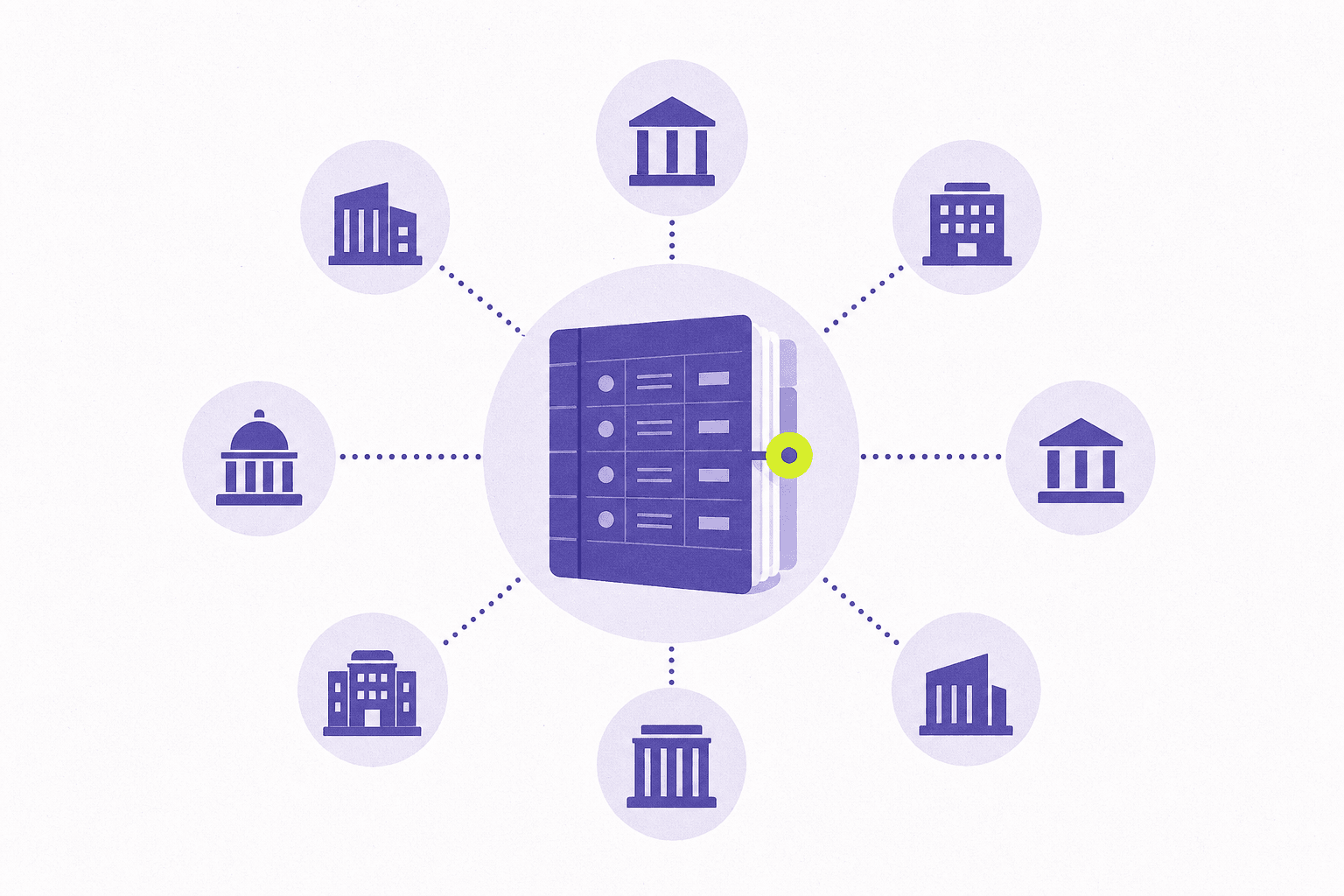
Lead lenders manage a participation network by giving each participant scoped access to its share of one loan record, delivering documents and reporting there once, and recording what each participant received and when. The participation agreement defines the obligations, and the record proves they were met.
Forwarding documents by email turns the lead into a relay whose workload grows with every participant, every loan and every year the loans stay on the books.
What is a loan participation?
In a loan participation, the lead lender originates and services a loan and sells undivided interests in it to participating lenders. Participants share in the loan's payments and risk according to their shares, and rely on the lead for documents, collections and reporting.
Community banks and credit unions use participations to make loans larger than their own limits allow, to diversify and to serve relationships they could not carry alone. Participants often buy into many loans from the same lead, which makes the lead's servicing practices part of each participant's own risk.
What does a lead lender owe participants?
| Obligation | What participants need | When |
|---|---|---|
| Credit file | The underwriting, approval, appraisal and third-party reports supporting the loan | Before purchase |
| Closing documents | Executed loan documents, title policy and closing binder | After funding |
| Payments | Their share of principal and interest | Each payment cycle |
| Financial reporting | Borrower operating statements, rent rolls and guarantor financials | As the loan agreement requires |
| Covenant results | Test results and any breaches, waivers or amendments | Each test date |
| Material events | Defaults, modifications, collateral changes and consent requests | Promptly, as the participation agreement requires |
What goes wrong when a lead runs participations by email?
The lead becomes middleware. It receives each document from the borrower or a vendor, then re-sends it to every participant, one attachment at a time, and answers each participant's questions about what it sent.
The work feels like good service. It is also labor that scales with participants times loans times years, and it creates problems of its own: participants working from different versions, no proof of what each received, and a new participant joining a loan with no easy way to get its full history.
How does scoped access replace forwarding?
Every participant gets access to exactly its slice of one shared loan record. Documents land there once, for every participant entitled to them, at the moment they arrive, and the lead's job becomes managing the record.
Version and delivery problems resolve at the same time. Each document has one current version, delivery is recorded, and a new participant receives scoped access to the complete history on day one.
What rules apply to credit union participations?
NCUA's rule at 12 CFR 701.22 sets specific requirements. A federal credit union that originates a participated loan must keep at least 10 percent of the outstanding balance for the life of the loan, and other eligible originators must keep at least 5 percent, unless state law requires more.
A purchasing credit union needs a written participation policy that establishes underwriting standards for participations and limits purchases from any one originating lender to the greater of $5,000,000 or 100 percent of its net worth, unless waived. The participation agreement must address items including the retained interest and the location and custodian of the original loan documents.
For the life of the loan, under 12 CFR 701.22.
What do examiners check on participations?
- Pro rata sharingThe OCC's examination procedures test whether participation agreements share risks and payments on a pro rata basis.
- Accurate booksWhether the bank's records properly reflect its asset or liability.
- Equal controls for sold participationsWhether a lead exercises the same controls over participations sold as over loans it keeps.
- Equal controls for purchased participationsWhether a participant exercises the same controls over purchased participations as over loans it originates.
- Timing of salesWhether loans were sold just before an exam to avoid criticism.
What diligence does a participant need to do?
A participant underwrites its share independently. That means reviewing the lead's credit memo and also the underlying evidence: the appraisal and its review, the rent roll and leases, the environmental and property condition reports, and the sponsor's financial information.
Participants that rely only on the lead's summary draw examiner comments. Scoped access to the full credit file lets a participant do its own review quickly, with a record showing it did.
Why does participant reporting decay over time?
Reporting obligations run for years, and email-based delivery wears down. Contacts change at participant banks, forwarded statements go to former employees, and the lead's staff turn over. Participants notice missing reports at their own exams.
A shared record keeps delivery independent of individual inboxes. When a quarterly rent roll arrives, every participant with access sees it, and the record shows it was available on that date.
Why do both lead and participants need proof of delivery?
The lead has to show it delivered what the participation agreements required, when they required it. Each participant has to show its auditors and examiners that it received the information and monitored its share.
The same activity log answers both. It also protects the lead in a dispute over whether a participant was told about a default, a modification or a consent request in time.
How do title and documents work for participants?
Participants typically rely on the lead's title policy and loan documents. ALTA publishes a commercial participation interest endorsement, the ALTA 30.1, that lenders can use to address participants' interests under the lender's policy.
Original documents need a custodian. NCUA's participation rule requires the participation agreement to state the location and custodian of the original loan documents, a detail worth recording for every participated loan.
What should a participation agreement cover?
- Shares and pro rata treatmentEach participant's interest and how payments, losses and expenses are shared.
- Servicing standardHow the lead services the loan and what it may do without participant consent.
- Remittance timingWhen the lead passes through each participant's share of payments.
- ReportingWhat information participants receive and when.
- Consent and voting rightsWhich decisions, such as modifications, releases or foreclosure, need participant approval.
- Document custodyThe custodian and location of the original loan documents.
- TransfersWhether and how participants may sell their interests.
How should a lead onboard a new participant?
- Execute the participation agreementIncluding shares, reporting obligations, consent rights and document custody.
- Grant scoped accessTo the credit file, closing documents and reporting for that loan.
- Confirm contactsName primary and backup contacts at the participant.
- Share the reporting calendarShow what the participant will receive and when.
- Record the onboardingKeep the agreement, access grant and first deliveries on the loan record.
How does Prodeal support participation networks?
Prodeal lets lead lenders give participants permissioned access to their loans, with watermarking and download controls on sensitive documents and an activity report showing what each participant received. TruStone Financial uses Prodeal for participation loans alongside originations and servicing, and FRB Capital adds participants and stakeholders to a deal with a click.
Questions lenders ask
- What is a loan participation network?
- It is a group of lenders that buy interests in loans originated and serviced by a lead lender. Participants share payments and risk pro rata and rely on the lead for documents, collections and reporting.
- What does a lead lender owe participants?
- The credit file before purchase, closing documents after funding, their share of payments, borrower financial reporting, covenant results and prompt notice of material events such as defaults, modifications and consent requests, as the participation agreement defines.
- How much of a participated loan must a credit union keep?
- Under 12 CFR 701.22, a federal credit union that originates a participated loan must keep at least 10 percent of the outstanding balance for the life of the loan. Other eligible originators must keep at least 5 percent unless state law requires more.
- Do participants need to underwrite the loan themselves?
- Yes. Examiners expect participants to exercise the same controls over purchased participations as over loans they originate, and credit unions must follow written underwriting standards for participations.
- What do examiners check on loan participations?
- They test whether agreements share risks and payments pro rata, whether books reflect the bank's position, whether leads and participants apply the same controls as for their own loans, and whether loans were sold just before an exam.
- Why should lead lenders stop forwarding documents to participants?
- Forwarding scales with participants, loans and years, creates version confusion and leaves no proof of delivery. Scoped access to one shared record delivers each document once and records who received it.
- What is the ALTA 30.1 endorsement?
- It is ALTA's commercial participation interest endorsement, which lenders can use to address participants' interests under the lender's title insurance policy.