
Loans built to hold for a decade.
Life companies are the patient capital of commercial real estate lending. Their loans sit on the books for ten or fifteen years, so the file has to outlive the team that closed it. Prodeal is built for that durability.

Trusted by leading Real Estate Teams







The file outlives the team
Ten-year holds outlast the closer, the analyst, and sometimes the software. The record has to be self-explaining.
Covenant tracking for years
DSCR tests, financial reporting, and reserves run every period for the life of the loan.
The servicing tail is the point
Closing is the short part; the loan spends its life in servicing, where a scattered file hurts most.

Loans built to hold for a decade.
A hold-to-maturity file gets built once and stays retrievable for years.
01Open from your template
The deal opens with the document set a hold-to-maturity file needs.
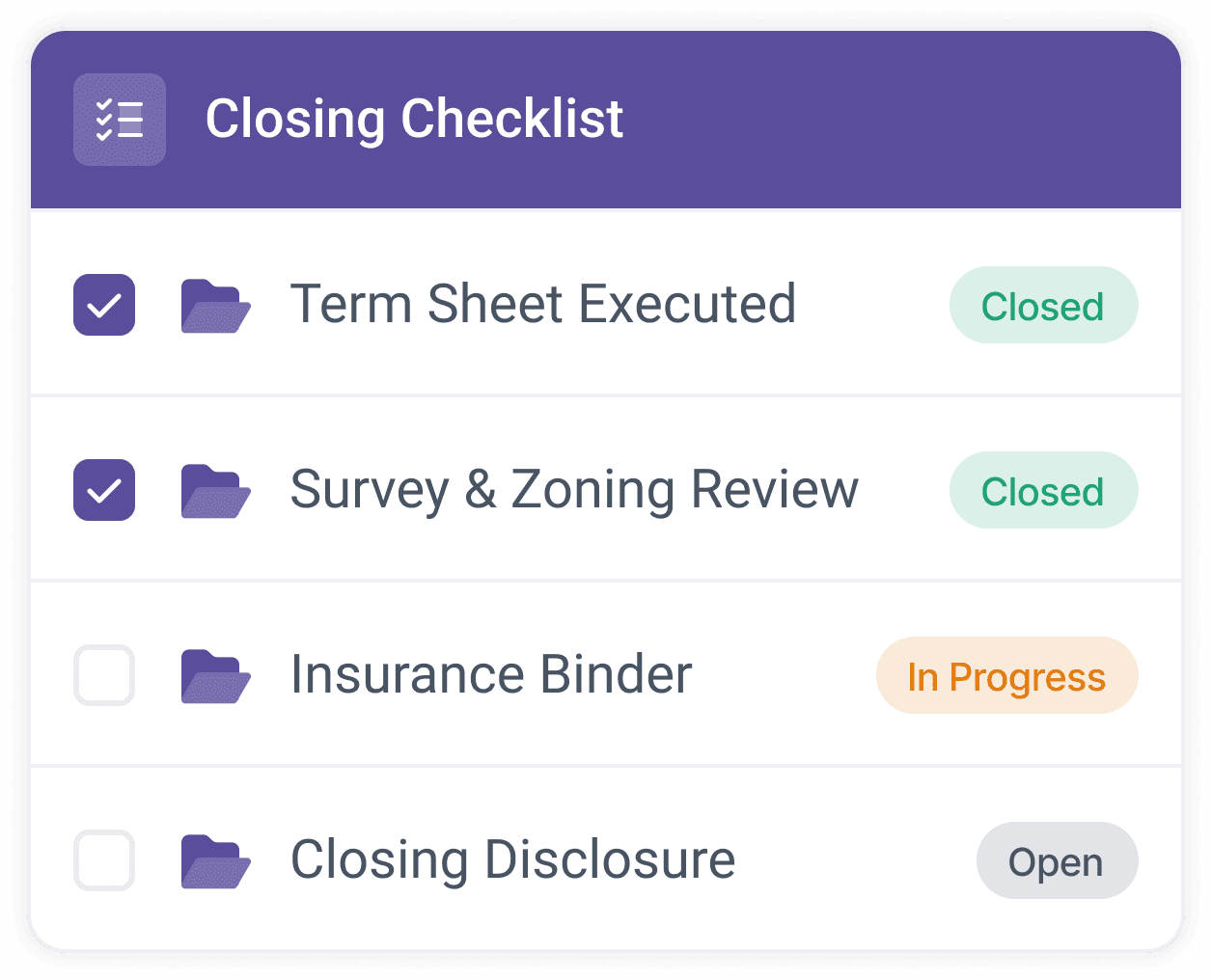
02Close with the parties on one list
Borrower, counsel, and title work the same room from term sheet to funded.
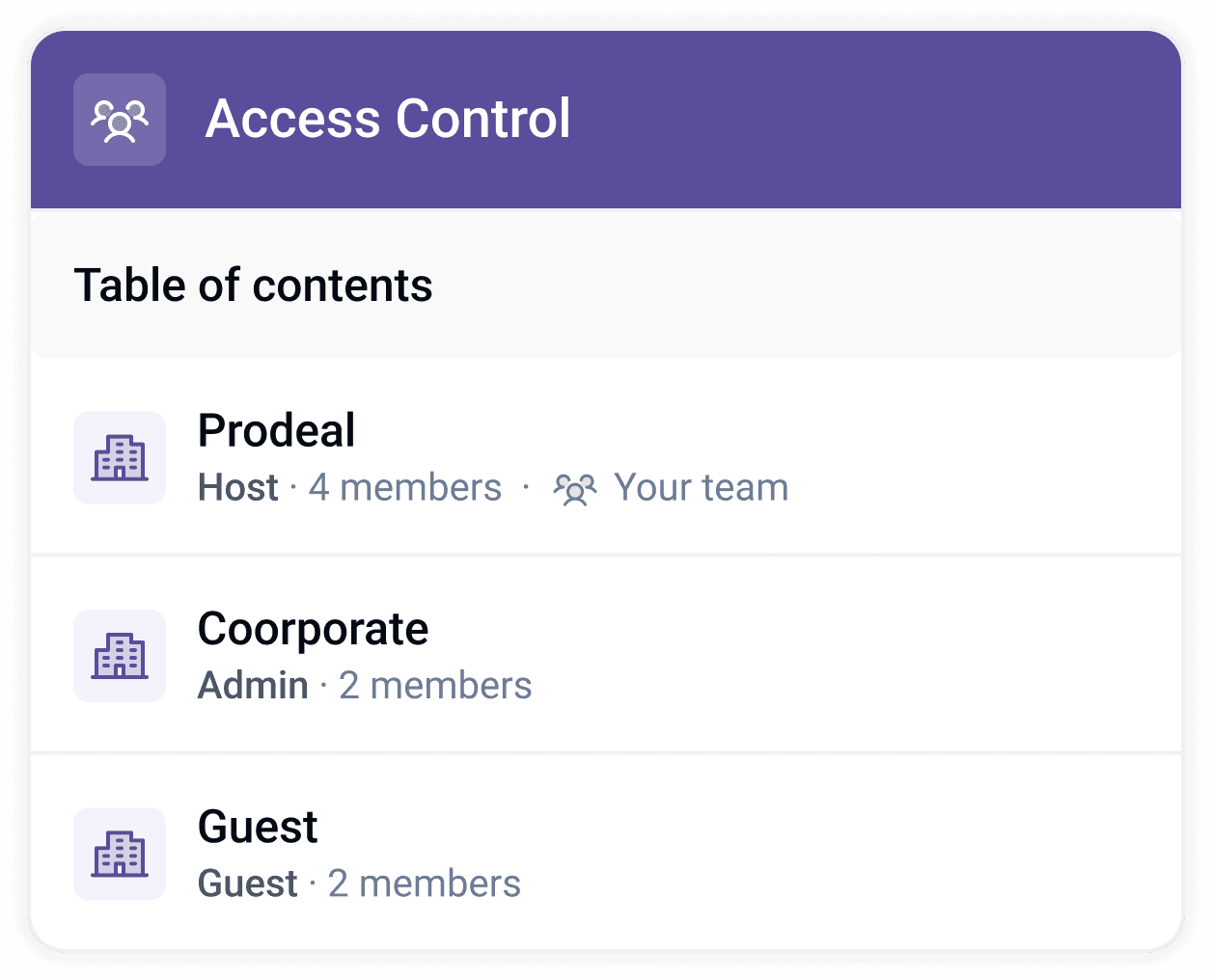
03Covenants become tracked items
Ongoing covenants and reporting live on the list with dates, for years, not memory.
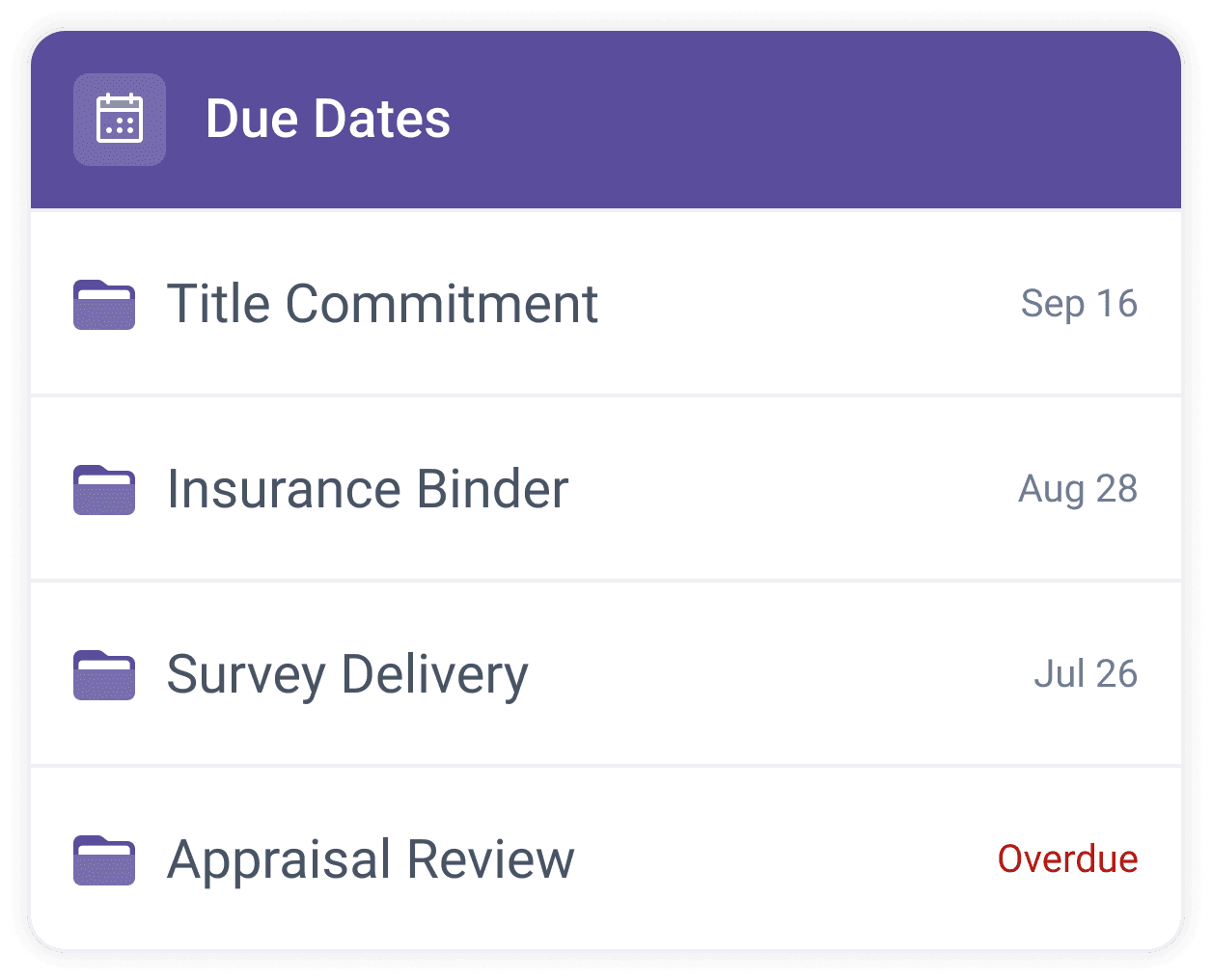
04The file stays retrievable
A hyperlinked binder and an exportable record keep the file assumption-ready for a decade.
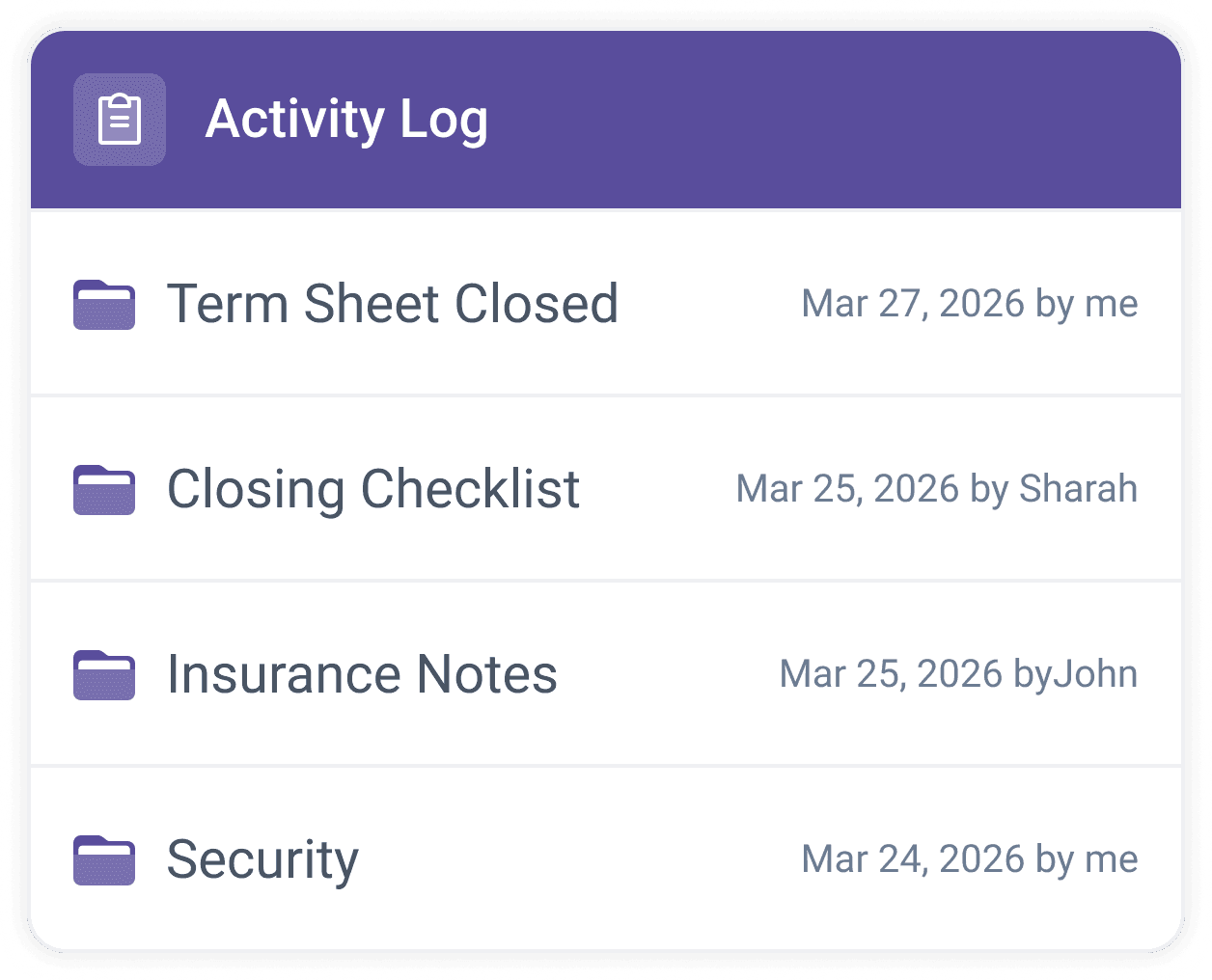
See a ten-year file built in one closing.
Book a demoA file that outlives the team
The record is the file: complete, time-stamped, and readable by whoever holds it in year nine.
Covenants on a calendar
Multi-year covenant and reporting items run as dated lines, not as tribal memory.
Assumption-ready always
When the loan trades or assumes, the complete file is a download, not a search.
Servicing-grade from day one
The binder and trail board with the loan, built for a decade of holding.
Questions lenders ask
- Why do life companies need a durable loan file?
- Because the loan is held for a decade or more. Covenant tests, reserve releases, and assumptions all run long after closing, and a file that scatters makes each of them harder than the last.
- Does Prodeal support the servicing phase?
- Yes. The organized closing file boards cleanly into servicing, where covenant tracking, reporting, and reserve releases run against the same live record.
- Does the file survive team turnover?
- Yes. The record is the file: a time-stamped history and a hyperlinked closing binder that a new team inherits intact, not a folder they have to trust.
- Can it track covenants over the life of the loan?
- Yes. Covenants and reporting are tracked items with due dates, so a multi-year servicing tail runs on the list instead of on memory.
Year nine, same clean file.
Bring one live deal to the walkthrough. The file your future team inherits builds itself now.