
The short answer
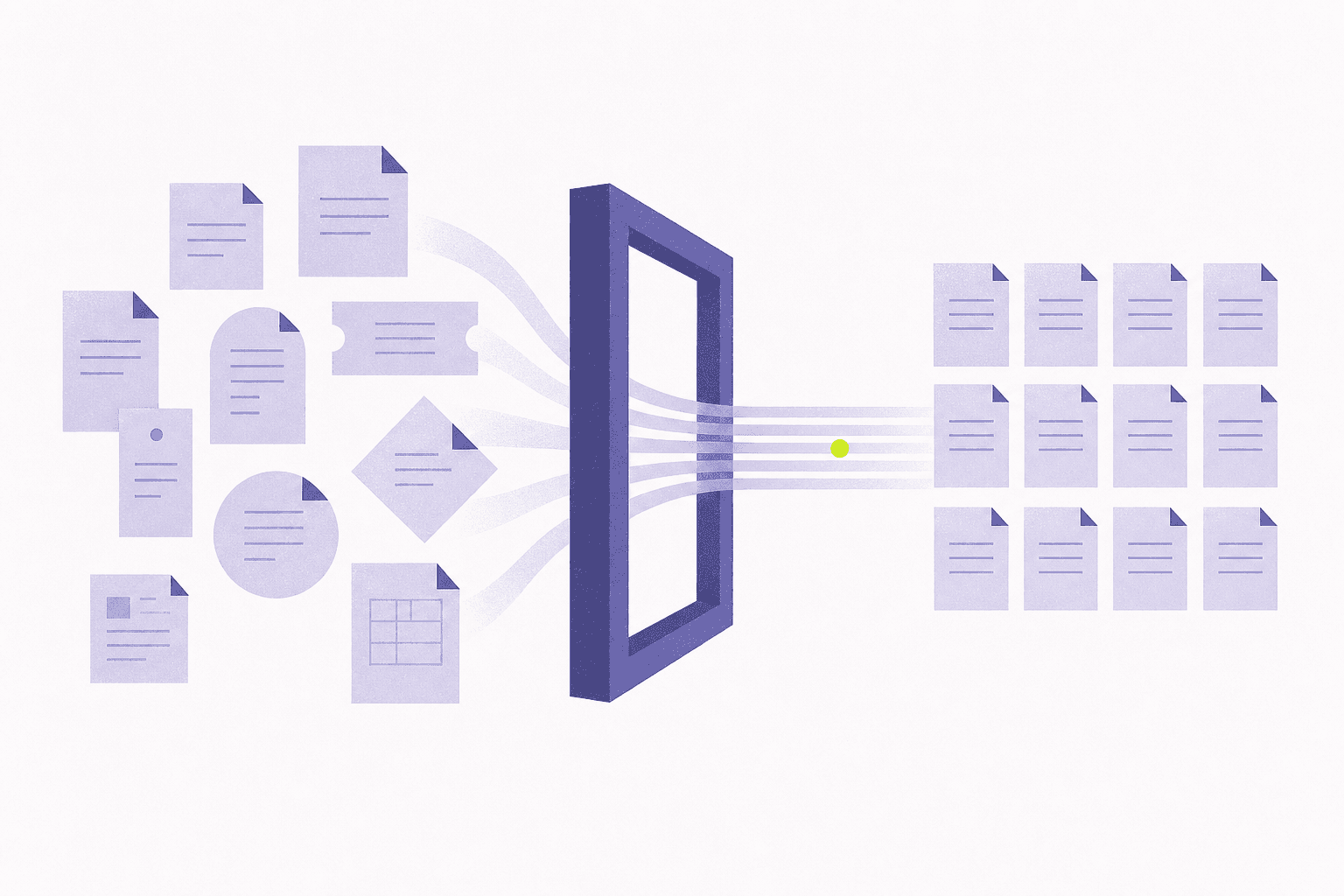
Commercial lenders standardize closing checklists so every file meets the same bar, whoever closed the deal. A shared template for each loan type makes files consistent for examiners, lets any closer pick up any deal, shortens onboarding and gives the team one place to encode lessons.
The standard sets the starting list. Closers still adapt it to each deal, and their judgment goes to the parts of the deal that are unusual.
What goes wrong when every closer keeps a personal checklist?
Personal checklists work deal by deal, which is why they survive. Each experienced closer has a spreadsheet refined over years that they read fluently and colleagues struggle to follow.
Across the portfolio, file quality then depends on who ran the deal. The variance hides until it gets expensive: a closer is out and a colleague has to run the deal from an unfamiliar spreadsheet, an examiner samples files that follow different structures, or a strong closer leaves and the team's working process leaves too.
Personal checklists concentrate knowledge in a few people. That is key-person risk, and it grows with every year a closer spends refining a private list.
What do examiners expect from closing checklists?
The OCC's Commercial Real Estate Lending handbook asks examiners whether a bank employs standardized checklists to control documentation for individual files. The FDIC's Risk Management Manual lists the sufficiency of credit and collateral documentation among the factors loan reviews typically analyze.
Standard checklists answer both. When every file follows the same template, a sample of loans confirms the control, and missing items stand out against the standard. TruStone Financial centralized documents into data rooms with standardized checklists and found audit preparation simpler as a result.
What does a standard checklist buy?
- Consistent filesSampled loans match, because they were built from the same list.
- CoverageAny closer can step into any deal, since the list reads the same for everyone.
- Faster onboardingNew hires learn one standard per loan type.
- Encoded lessonsA problem found on one deal becomes a line that protects every later deal.
- Portfolio reportingStandard items and statuses roll up across deals, so leaders can compare progress.
- A better borrower experienceBorrowers receive the same clear requests on every deal.
How many checklist templates does a lender need?
Build one template per loan type or program your team closes regularly. The core sections repeat, and each type adds its own lines.
| Loan type | Lines the template adds |
|---|---|
| Stabilized term loan | Estoppels and SNDAs, rent roll certification, reserve setup |
| Construction loan | Plans and budget review, construction contract, bonds, builder's risk, draw procedures, contractor consents |
| Bridge loan | Business plan, interest reserve, rate cap where required, extension conditions |
| HUD-insured loan | Firm commitment conditions, HUD exhibits and forms, regulatory agreement |
| Participation purchased | Originator's credit file, participation agreement, the purchaser's own underwriting review |
| Refinance of existing loan | Payoff letter, lien release, updated third-party reports |
What sections belong in a commercial loan closing checklist?
- Approval conditionsEvery condition from the commitment, linked to the evidence that will satisfy it.
- Borrower and entityFormation documents, good standing, resolutions, beneficial ownership.
- Title and surveyCommitment review, requirements, endorsements, survey and zoning.
- Third-party reportsAppraisal and review, environmental, property condition, flood determination.
- Leases and incomeRent roll, leases, estoppels, SNDAs, operating statements.
- InsuranceRequirements letter, certificates, endorsements, flood policy where needed.
- Loan documentsDrafts, comments, execution versions, legal opinion.
- Funding and post-closingSettlement statement, wire verification, recording, final title policy, boarding.
What makes a checklist line well written?
A good line tells a stranger exactly what is needed. It names the deliverable, the responsible role, the timing relative to closing, what acceptance looks like and which condition it serves.
"Insurance" is a category. "Evidence of property insurance on ACORD 28 naming the lender as mortgagee with successors and assigns language, received and reviewed before the settlement statement circulates" is a line a new closer can run without asking anyone.
Does standardization slow down experienced closers?
Closers work faster from a standard. They start each deal with most of the list already built and spend their attention on what makes this deal different: an unusual lease, a layered ownership structure, a program requirement.
The standard sets the base, and the closer adds, removes or edits lines for the deal. The adaptation is where experience shows, and the base protects the file on the days experience is busy elsewhere.
Who should own the standard checklist?
Give the templates one owner, usually the head of closing or credit administration. Closers propose changes, the owner approves them, and each change carries a date and a reason, so the team knows which version a given deal used.
Review the templates on a schedule and after every exam finding or closing problem. A lesson that stays in a meeting note protects nobody, and the same lesson written into a template protects every deal that follows.
How do you keep checklist templates current?
Update templates when something outside the deal changes. Regulatory changes, such as new beneficial ownership or flood insurance requirements, add or rewrite lines. New loan programs need their own templates. Exam findings point to lines that were missing or too vague.
Update them when something inside a deal goes wrong. A document that surfaced late, a condition that was satisfied the wrong way or a post-closing item that went missing each deserves a line or a clearer acceptance note.
Record each change with the date, the reason and the author. The history tells examiners and new closers why each line exists.
What should stay flexible in a standard checklist?
Closers need three kinds of flexibility. They add lines for deal-specific conditions, such as a ground lessor consent or a special reserve. They mark standard lines not applicable, with a reason, so a reviewer can see the line was considered. They adjust due dates to the deal's calendar.
Custom statuses help here. A status such as N/A with a required note keeps the standard intact while recording the closer's decision, and the file still reads the same way as every other file.
How do you roll out a standard without disrupting live deals?
- Collect the best listsGather the personal checklists your strongest closers use for each loan type.
- Merge them into templatesCombine the lines, resolve differences and add acceptance criteria.
- Start with new dealsRun new closings on the templates and let live deals finish as they started.
- Retire the spreadsheetsOnce the first deals close cleanly, archive the personal lists.
- Train on the standardWalk every closer through the templates and the change process.
What does standardization make possible?
A standard checklist is the shared object most other improvements need. Portfolio reporting, audit readiness, borrower portals and faster onboarding all depend on deals that share structure.
Customers describe the change in practical terms. Green Block built one custom checklist template that it sends to every new client, and Marcia Gilad, its president and COO, said it "allowed us to create a real process and real structure around the processing of our loans." SVN Holman Partners replaced five diligence platforms with one live checklist.
How do standard checklists improve portfolio reporting?
Standard lines make portfolio questions answerable. When every deal carries the same flood determination item, a manager can list every deal where it is still open. When every deal uses the same statuses, the team can count past-due items across the pipeline and see which categories run late most often.
Personal spreadsheets make those questions a manual survey of every closer. A standard turns them into a filter.
How does Prodeal support standard checklists?
Prodeal stores checklist templates that teams copy into each new deal, with configurable statuses, due dates, custom columns and bulk actions for assigning responsibility. Closers adapt each deal's list without changing the template, and template owners update the standard for the next deal.
Questions lenders ask
- Why should lenders standardize closing checklists?
- A standard checklist makes file quality independent of which closer ran the deal. It gives examiners consistent files, lets any closer cover any deal, shortens onboarding and gives the team one place to capture lessons from problem deals.
- Do examiners look at whether checklists are standardized?
- The OCC's Commercial Real Estate Lending handbook asks examiners whether a bank employs standardized checklists to control documentation for individual files, and loan reviews test the sufficiency of documentation across sampled files.
- Does a standard checklist make closings rigid?
- A standard sets the starting list, and closers adapt it to each deal. Experienced closers start most of the way built and put their judgment into what makes the deal unusual.
- How many closing checklist templates does a lender need?
- Build one for each loan type or program closed regularly, such as stabilized term loans, construction loans, bridge loans, HUD-insured loans, purchased participations and refinances. The core sections repeat, and each template adds the lines its type requires.
- What should a commercial loan closing checklist include?
- It should cover approval conditions, borrower and entity documents, title and survey, third-party reports, leases and income, insurance, loan documents, and funding and post-closing items, with an owner, timing and acceptance criteria on every line.
- Who should own a lender's checklist templates?
- One owner, usually the head of closing or credit administration. Closers propose changes, the owner approves them, and each version is dated so the team knows which standard a deal followed.
- How do you move a team from personal checklists to a standard?
- Collect the best personal lists, merge them into templates by loan type, start new deals on the templates while live deals finish, retire the spreadsheets once the first deals close cleanly, and train every closer on the change process.
Sources and further reading
- The due diligence checklist, built to be runThe operating discipline behind a good template.
- The commercial loan closing checklistThe baseline this standardizes.
- The commercial loan closing processWhere the template starts each deal.
- Deal management software for commercial lendersThe system that holds the templates.