
The deal workspace, not another CRM.
Deal management software means two different products. Prodeal is the deal workspace, not the pipeline CRM: the place where the two-hundred-line checklist lives with owners and statuses and the closing actually gets run.

Deal management software means three different products, which is why the category pages disagree. Sales tools like Salesloft manage a pipeline of opportunities. Private equity and venture tools like Affinity manage deal flow and relationships. Real estate tools manage the transaction itself, the documents, parties and checklist that get a deal closed. Prodeal is the third kind, built for commercial real estate lending, and it sits beside a CRM rather than replacing it.
The three products that share this name
Search results for deal management software disagree with each other because the phrase covers three different jobs. Sales tools manage a pipeline of opportunities, so their unit of work is a stage and their users are reps and managers. Private equity and venture tools manage sourcing and relationships, so their unit of work is a company and their users are investors. Real estate and lending tools manage the transaction itself, so the unit of work is a checklist item with an owner and a due date.
Picking the wrong category is expensive in a specific way. A pipeline tool will track that a loan is at ninety percent probability and tell you nothing about the title exception holding it. A sourcing tool will remember every conversation with the borrower and not know which of the forty conditions is outstanding. Both are good products doing the job they were built for.
A lender usually needs two of the three. The CRM keeps the relationship and the pipeline. The deal workspace runs what happens after credit approval. They answer different questions and the handoff between them is a deal moving from probable to real.
What to evaluate when the demos all look the same
Every product in this category demos well, because a demo shows a clean deal with cooperative parties. The differences show up in the conditions nobody stages.
Ask what happens when an outside party has to deliver something. Counsel, title and the borrower produce most of what a closing needs, and whether they can do it without an account, training or a support call is the single largest determinant of how long a closing takes. Ask how a new deal starts, because a product that opens an empty room makes you rebuild the same structure every month. Ask what the system can hand an examiner three years from now, in a file, without a support ticket.
Then price it against your own volume rather than the vendor's example: last year's closed deals, average parties per deal, and how long rooms stay open after funding. Those three numbers reorder most shortlists.
Trusted by leading Real Estate Teams






The CRM does not close deals
A pipeline tracks what might close. It does not run the checklist, the documents, or the parties on deals that are.
Closings live in email
Without a workspace, the process runs in a spreadsheet, a folder, and reply-all.
The record scatters
The audit trail exists only if someone reconstructs it later.
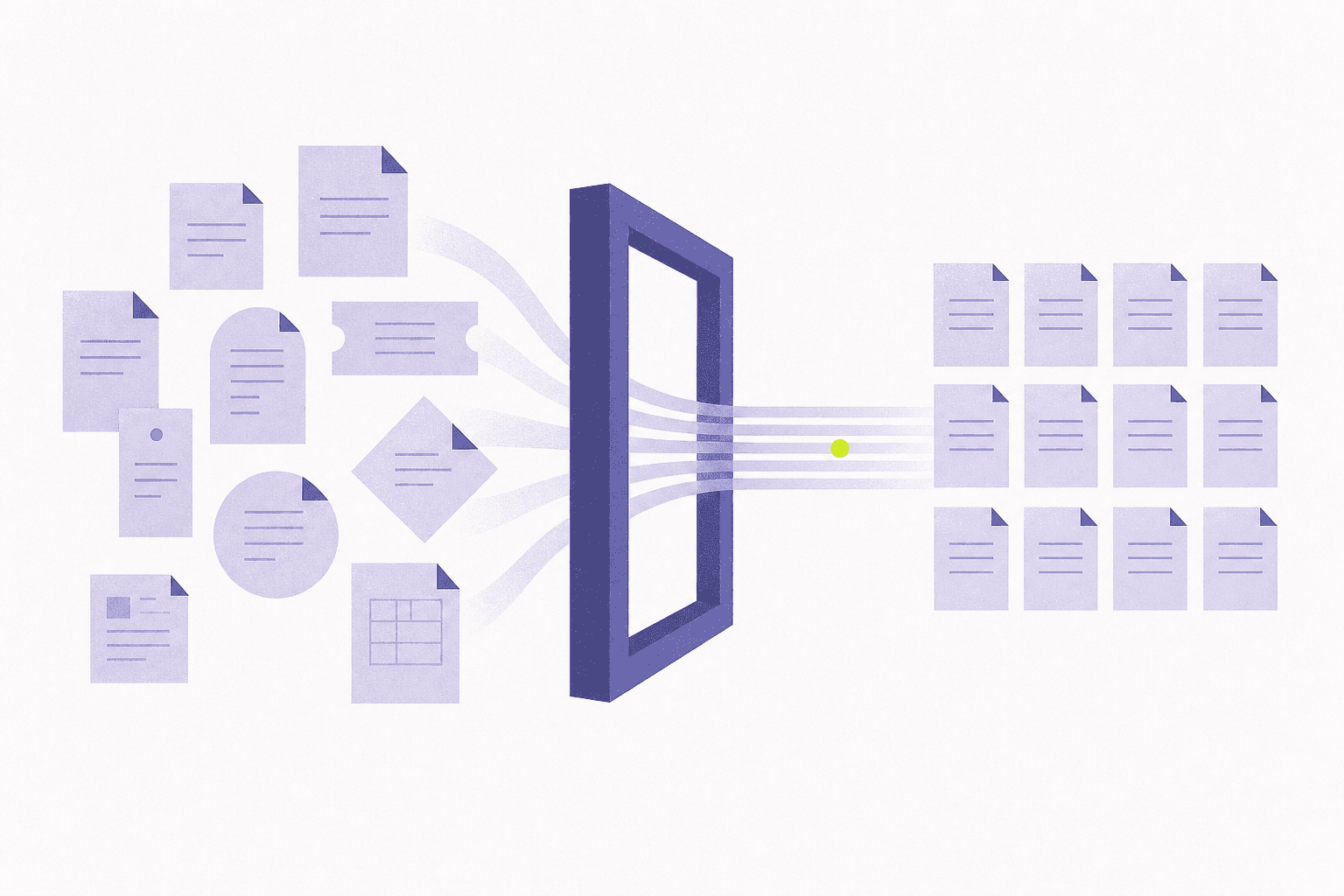
The deal, run in one workspace.
Your CRM keeps the pipeline. This is how the deal itself gets run.
01Open the deal from a template
Structure, teams, and access land in place, so the deal starts built instead of from a blank room.
02Everyone works the one list
Borrower, counsel, and title work their own items in the same room, so status is not five spreadsheets.
03Status moves as work happens
Items go open to closed with an owner and a due date, and the master view shows every deal at once.
04The record exports
The activity report and closing binder export from the deal, ready for the file and the exam.
Put one live deal in the workspace and watch it run.
Book a demoThe deal, not the pipeline
Your CRM keeps the relationship. The workspace runs the deal itself: the documents, the parties, and the two-hundred-line list.
External parties, inside the room
Borrower, counsel, and title work scoped views of the same deal instead of forwarding attachments.
Status without asking
A filterable master view shows every deal in flight, so leadership reads the book without a status meeting.
A record that exports
The activity report and closing binder leave the platform as files, ready for the exam.
There was one place where I can find anything I needed for any of the dozens of deals that I'm working on.”
Questions lenders ask
- Is deal management software the same as a CRM?
- No. A CRM manages the sales pipeline; a deal workspace manages the execution of deals that are closing. Prodeal is the second, and lenders usually already have the first.
- Can it run alongside our CRM?
- Yes. Most teams keep the CRM for pipeline and use Prodeal for the deal. An API and the Outlook Calendar connection connect the two.
- What happens to the deal after it closes?
- It becomes the record. The audit trail and a hyperlinked closing binder export from the same list the deal ran on.
- What is the best deal management software for real estate?
- For real estate the category splits again between acquisitions pipeline tools, which track deals being considered, and transaction tools, which run the closing. Dealpath is the known name on the acquisitions side. Prodeal is built for the lending transaction: the checklist, the outside parties and the record. The right answer depends on whether your bottleneck is choosing deals or closing them.
- Do we need deal management software if we already have a CRM?
- If closings are slipping, yes, because a CRM tracks probability rather than conditions. The CRM answers what might close and when. A deal workspace answers what is missing today, who owes it, and what happens if it does not arrive. Most lenders run both and treat credit approval as the handoff.
- How long does deal management software take to implement?
- The honest variable is not the software, it is whether your closing checklists exist in a usable form. Teams that already work from a standard list per deal type are productive quickly, because those lists become templates. Teams whose checklist lives in one person's spreadsheet spend the first weeks writing it down, which is work worth doing regardless.
Your next deal, in one workspace.
Bring one live deal to the walkthrough. See the room built on your checklist, running beside your CRM.